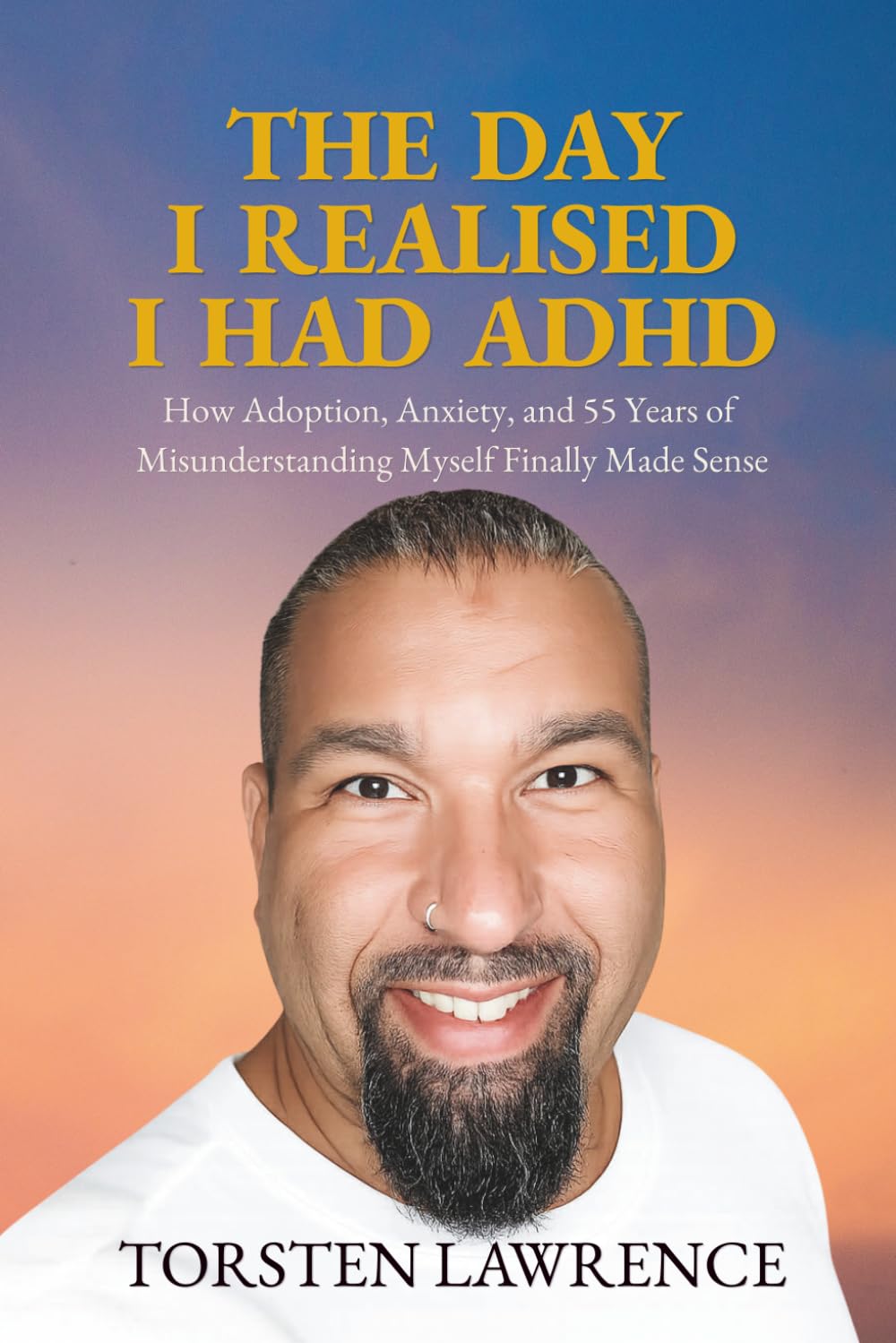
There is a particular kind of confusion that belongs to people who are both ADHD and adopted. It is not simply the sum of two experiences added together. It is a compound — each one amplifying the other in ways that are extraordinarily difficult to untangle, even for the people living inside them.
I spent fifty-five years inside this compound before I had a name for either piece. And what I have learned is that most of the available advice — for ADHD or for adoption — only addresses half the picture. This piece is an attempt to address both halves at once.
Two Systems Running at Once
ADHD gives you a brain that craves stimulation, struggles with routine, and processes rejection like a physical wound. Adoption gives you a nervous system that learned, before you had language, that connection is not guaranteed. Put those two systems together and you get someone who desperately wants to belong but cannot sit still long enough to perform the rituals of belonging.
You interrupt conversations because your brain moves faster than the room — and then spend three hours replaying the moment, terrified you have pushed someone away. The ADHD fires the impulse. The adoption wound supplies the fear. Neither one is the whole explanation. Together, they are.
Can Adoption Trauma Make ADHD Symptoms Worse?
This is the question that nobody in the clinical literature seems willing to answer directly, so I will answer it from lived experience: yes. Absolutely.
Early separation does something to the nervous system that looks remarkably like ADHD from the outside. The hypervigilance, the difficulty settling, the emotional dysregulation, the sleep disruption — these are trauma responses, but they present as ADHD symptoms. A clinician seeing these patterns in an adopted child or adult might diagnose ADHD without ever asking about the adoption. And they might be half right.
The problem is that ADHD medication and strategies only address the neurodevelopmental piece. If there is also a trauma layer underneath — a nervous system that learned danger before it learned language — the stimulant can sharpen your focus while your body still refuses to feel safe. You become a more efficient anxious person, not a calmer one.
Why Late-Diagnosed ADHD Hits Adoptees Differently
For most late-diagnosed adults, the ADHD revelation comes with grief for the decades lost to not knowing. But for adoptees, that grief has a second layer: the realisation that the very people who were supposed to know you best — your adoptive family, your teachers, sometimes your therapists — missed it too.
An adoptee is already carrying a foundational story of being given away. Discovering that you also had ADHD the entire time, and nobody saw it, can feel like another form of not being seen. Not malicious — almost never malicious — but the result is the same: you conclude, again, that something about you is invisible.
This is why late ADHD diagnosis in adoptees often triggers not just the standard grief-and-relief cycle, but a much deeper identity reckoning. You are not just asking "who would I have been with the right diagnosis?" You are asking "who would I have been with the right family, the right diagnosis, and the right understanding, all at once?"
The Masking Doubles
Most ADHD adults learn to mask — to perform a version of neurotypical behaviour so the world does not punish them for being themselves. But adoptees also mask, often from infancy. They learn to read the emotional climate of a room and become whatever is needed to secure attachment.
When you are doing both at the same time, the mask becomes so complete that you can lose yourself entirely. You are performing attentiveness while your mind races. You are performing calm while your nervous system screams. And because the performance is so convincing, nobody asks if you are okay.
The exhaustion from this double masking is unlike anything I can compare it to. It is not tiredness. It is the bone-deep fatigue of being two people at all times — the person you are, and the person you have learned the world will accept — and doing it so well that nobody, including you, can tell which is which.
Rejection Sensitivity: Where ADHD and Adoption Collide
Rejection sensitivity dysphoria is well documented in ADHD. The emotional pain of perceived rejection lands harder, lasts longer, and feels more like a physical wound than a social inconvenience. But adoptees already carry a primal template for rejection: the first separation. They do not need to learn that people leave. They already know it.
When ADHD's rejection sensitivity meets adoption's abandonment template, ordinary social friction becomes unbearable. A friend who does not text back is not busy — they are leaving. A partner who seems distant is not tired — they are about to disappear. The ADHD brain generates the alarm. The adoption wound confirms it.
And the cruel irony is that the very coping strategies most people use to manage rejection — self-soothing, rational reappraisal, calling a friend — are exactly the things ADHD makes difficult. Your emotional regulation is already compromised, and the wound you are trying to regulate was installed before you had any regulation to begin with.
Identity: Not Knowing Who You Are, Twice
Adoptees often struggle with identity because they are missing the biological mirror that most people take for granted. You grow up not seeing your face in anyone else's. You build a self from the outside in, using clues from the family and culture you were placed into, rather than the one you came from.
ADHD adds its own identity confusion. When your interests shift every few months, when you cannot sustain the commitments that define other people's sense of self, when your executive function makes it hard to follow through on the plans that would ordinarily become a career, a hobby, a life — you end up with a fragmented sense of who you are.
Put both together and you have someone who does not know who they are from the inside (adoption) and cannot build a consistent self from the outside (ADHD). It is not dramatic to say this is an identity crisis. It is accurate. And it can last decades if neither piece is named.
What Helps: Separating the Wires
The single most useful thing I have learned is to ask, in any moment of distress: is this the ADHD or is this the adoption wound? The answer is often both, but even asking the question creates a tiny space between you and the reaction. And in that space, you can choose a response that actually matches what is happening.
If the restlessness is ADHD, movement helps. If the restlessness is hypervigilance from early trauma, movement might just be another form of running. You might need stillness instead — not to be calm, but to prove to your nervous system that you can sit with discomfort without disappearing.
Therapy that addresses only the ADHD will miss the wound underneath. Therapy that addresses only the adoption will miss the neurology above it. The most effective approach I have found is working with someone who understands both — and who is willing to sit with the fact that you are not a simple case, and probably never will be.
And honestly, reading helps. Not self-help books that promise to fix you in twelve weeks, but writing by people who have been where you are. People who know what it is like to be double-wired and are not offering a cure, just company.
Discovering ADHD After Growing Up Adopted
If you are adopted and you are reading this because you suspect you might also have ADHD, here is what I want you to know: the suspicion itself is information. Your body has been trying to tell you something for years, possibly decades. The fact that you are finally listening is not a failure of timing. It is an act of courage.
You do not need a formal diagnosis to start understanding yourself differently. I have never had one. What I have is fifty-five years of lived data, and the willingness to finally look at it honestly. That has been enough to change my relationship to my own mind, my anxiety, and my history.
And if the professionals you speak to do not understand the intersection — if they want to treat the ADHD or the adoption trauma but not both — trust your experience over their framework. You are the only person alive who knows what it feels like to be you.
You Are Not Broken. You Are Double-Wired.
Understanding the double wiring matters because it changes the treatment, the self-talk, and the timeline for healing. You are not dealing with one thing that has two names. You are dealing with two distinct experiences that have been braided together since before you could speak.
Separating them — learning which response is the ADHD talking and which is the adoption wound — is not about choosing sides. It is about giving each part of yourself the specific understanding it deserves, instead of lumping everything under the word "broken."
You are not broken. You are double-wired. And once you understand the circuitry, you can finally stop fighting yourself and start working with the extraordinary brain you actually have.