Nobody prepares you for what happens after. The diagnosis — or, in many cases, the self-recognition — arrives like a key turning in a lock. Everything clicks. And then you are standing in a room you have never seen before, holding a map you did not know you needed, with fifty-plus years of unmapped territory stretching out behind you.
The first year after recognising ADHD in midlife is not a smooth arc from confusion to clarity. It is a landscape. There are peaks and valleys, and they often arrive on the same day. Here is what to expect — honestly, from someone who has walked it.
Phase One: The Rewrite (Weeks 1–8)
The first phase is intoxicating. Every memory you have ever carried gets reexamined through a new lens. The job you lost — that was executive dysfunction. The relationship that ended — that was rejection sensitivity dysphoria. The decades of insomnia — that was a brain that could not power down, not a body that did not want to sleep.
This rewrite is addictive. You will find yourself staying up late reading everything you can find about ADHD, nodding at every paragraph, sending links to people who may or may not be ready to hear it. You are not being obsessive. You are doing what your brain does best: hyperfocusing on something that finally, genuinely matters.
But be aware: this phase also carries a risk. In the euphoria of finally having an explanation, it is tempting to attribute everything to ADHD. Some of your struggles were ADHD. Some were circumstance, bad luck, or choices that had nothing to do with neurology. The goal is not to replace one totalising narrative with another. It is to see more clearly.
Phase Two: The Grief (Months 2–6)
The grief arrives without warning, often in quiet moments. You are making coffee, and suddenly you are thinking about the degree you never finished. You are walking the dog, and the weight of the friendships you lost to forgotten texts settles on your shoulders like a coat you cannot take off.
This grief is not self-pity. It is legitimate mourning for a version of your life that might have existed if someone — anyone — had noticed sooner. You are grieving decades, not moments. And the scale of that grief can be overwhelming, especially if you are also carrying adoption wounds, anxiety, or other layers that compound the loss.
Do not rush this phase. The well-meaning people in your life will want you to focus on the positive — "at least you know now!" — and they are right, but that does not mean the grief has no place. It does. You cannot build a new relationship with yourself on a foundation of unprocessed loss.
Phase Three: The Anger (Months 3–9)
Somewhere in the middle of the grief, the anger arrives. And it is not small. You are angry at the teachers who called you lazy. At the therapists who treated your anxiety for years without ever asking about attention. At the system that was supposed to catch this and did not.
If you are adopted, this anger may have an additional edge. The people who were supposed to know you best — your family, however lovingly constructed — also missed it. Not because they did not care, but because nobody taught them what to look for. The anger is valid even when the failing was not malicious.
Let the anger exist. It is telling you something important: that you deserved better. Not a perfect life, but an informed one. And the fact that you did not get it is worth being angry about, as long as the anger eventually becomes fuel rather than fire.
Phase Four: The Rebuild (Months 6–12+)
This is where the real work begins. The rewrite, the grief, and the anger have cleared the ground. Now you get to build something on it — a life designed around the brain you actually have, not the one you spent decades pretending to have.
The rebuild looks different for everyone. For some, it means medication. For others, it means restructuring work to accommodate energy cycles rather than fighting them. For many, it means finally giving themselves permission to rest without guilt, to say no without explanation, and to stop performing normality at the cost of their own wellbeing.
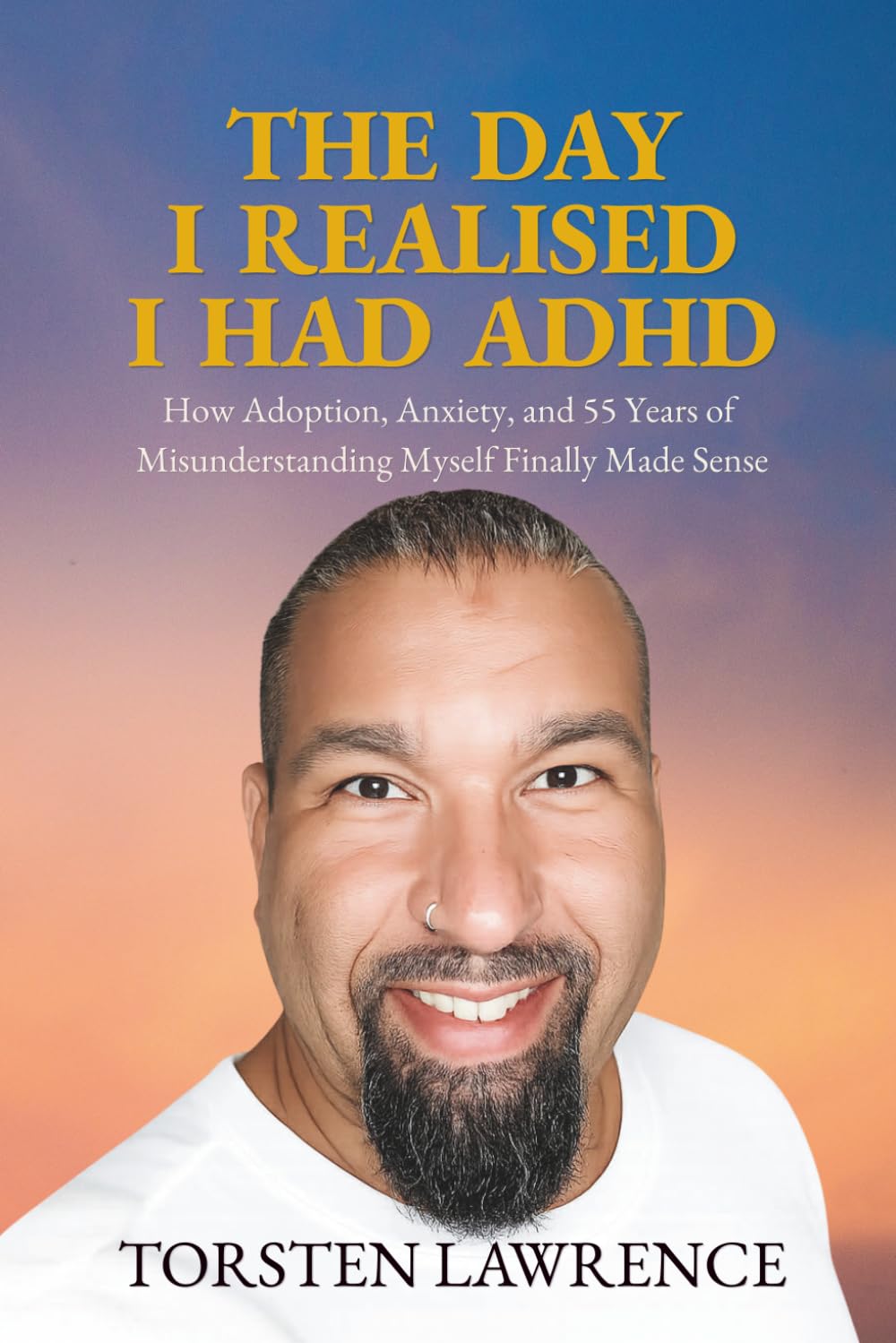
For me, the rebuild meant writing. The books I wished had existed when I was twenty-five, thirty-five, forty-five. The words I needed someone else to say first so I could believe them. That is what this website is, and what every article on it is trying to do: be the thing that was not there when I needed it, so that it can be there when you do.
What Nobody Tells You
Nobody tells you that after the diagnosis, some relationships will shift. People who were comfortable with the old you — the compliant, exhausted, masking version — may not recognise or welcome the person who emerges when the mask comes off. This is painful, but it is also information.
Nobody tells you that the hyperawareness fades. In the early months, every impulsive thought, every lost key, every emotional overreaction gets flagged as "ADHD doing its thing." Over time, that constant self-monitoring softens into something more like fluency — you know your patterns, and you can navigate them without narrating every step.
And nobody tells you that, despite everything — the grief, the anger, the lost decades — most people who recognise ADHD in midlife describe it as the best thing that ever happened to them. Not because it erases the past, but because it makes the future possible in a way it never was before.
The Starting Line, Not the Finish
If you have just recognised ADHD in yourself, or if someone you love has, remember this: the diagnosis is not the end of the story. It is the first chapter you get to write with accurate information about the main character. Everything before was a draft written in the dark.
The light is on now. And it is not too late to see by it.