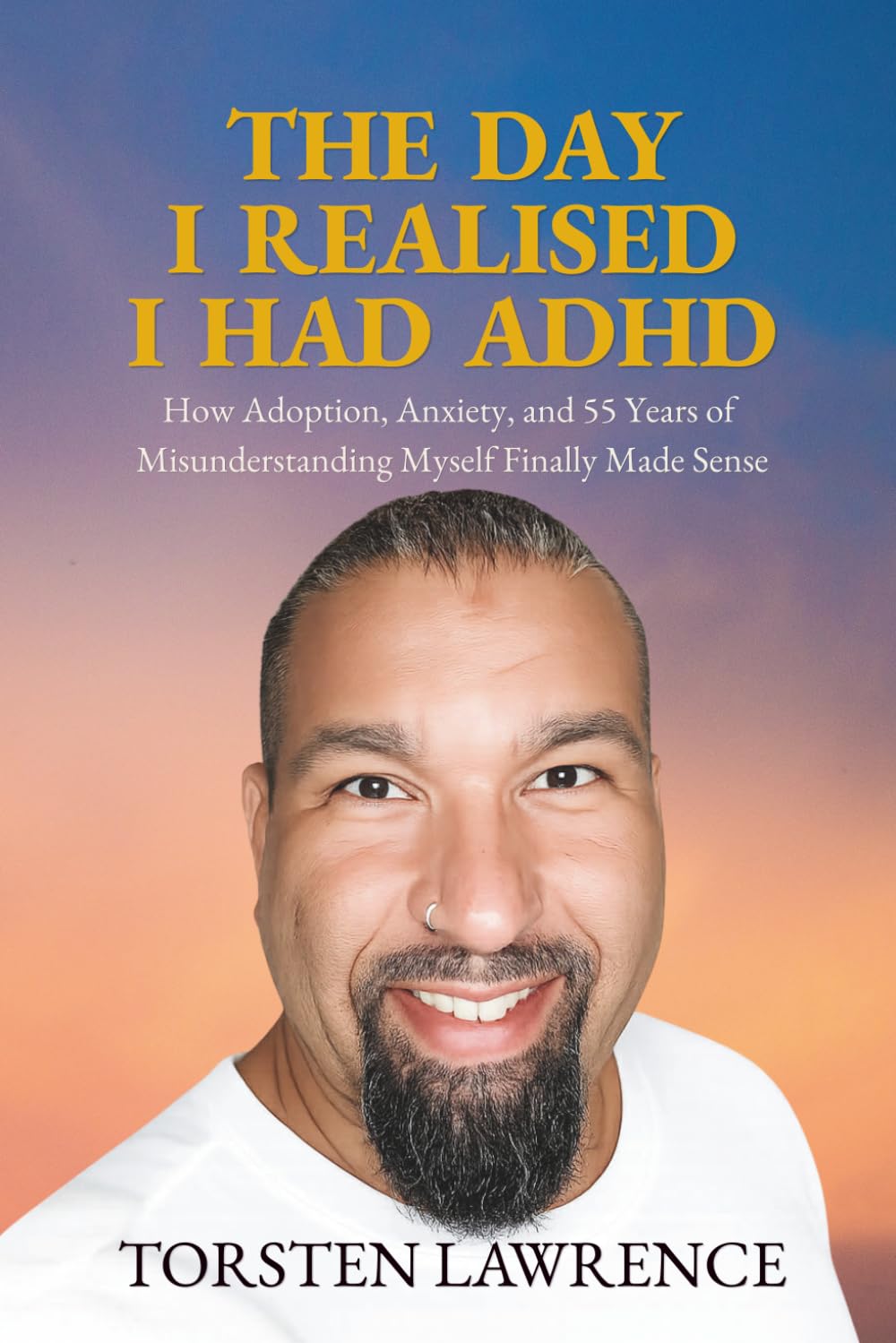
If you are reading this in your forties, fifties, or sixties, and you have recently started wondering whether you might have ADHD, you are not late. The system was late. You have been living inside a condition that the world around you was not equipped to see, and the reasons for that invisibility are not personal — they are structural.
Understanding why ADHD goes undiagnosed for decades is not an academic exercise. It is the difference between spending another decade blaming yourself and finally recognising that the oversight was never yours.
The Diagnostic Criteria Were Not Built for You
The original ADHD criteria were developed by observing hyperactive boys in classroom settings in the 1970s and 1980s. If you were not a boy, not hyperactive, or not failing visibly in school, you were not on anyone's radar. This is not a historical footnote. It is the reason an entire generation of inattentive, quietly struggling, high-functioning individuals — particularly women — slipped through without a second glance.
The criteria have improved since then, but the damage is done. Adults who were children in the 1970s, 1980s, and even 1990s grew up in a world that simply did not have the language to describe what was happening in their heads. And by the time the language existed, they had already built lives around the gap — compensating, masking, and internalising the belief that they were the problem.
Intelligence as Camouflage
High intelligence is possibly the most effective ADHD camouflage there is. If you are smart enough to compensate for your executive-function gaps, you never look like someone who needs help. You look like someone with potential who is not quite reaching it — which, in most educational and professional settings, is met with frustration rather than investigation.
Teachers say you could do better if you tried. Managers say you are brilliant but inconsistent. Partners say you are caring but unreliable. And you absorb all of it as evidence that the gap between your potential and your output is a character flaw, not a neurological one.
The cruelest irony is that the smarter you are, the longer the mask holds — and the more devastating the eventual unmasking feels, because you have built your entire identity around being someone who copes.
Adoption, Trauma, and Misattribution
For adoptees, the diagnostic picture gets even murkier. Many of the symptoms of ADHD — emotional dysregulation, difficulty with attachment, sensory sensitivity, sleep problems — overlap with the effects of early separation trauma. A clinician seeing these patterns in an adopted child might attribute everything to the adoption and never look further.
This was my story. The restlessness, the anxiety, the feeling of being fundamentally out of step with the world — all of it was explained away as the understandable consequence of being adopted. And it was, in part. But it was also ADHD. And the fact that nobody separated the two meant that I spent fifty-five years treating one condition while the other ran unchecked.
What Finally Changes
For most adults, the moment of recognition comes not from a clinician but from exposure — a book, a podcast, a social media post, a conversation with someone who has been diagnosed. You hear someone describe their inner experience, and for the first time in your life, you think: that is exactly what it is like inside my head.
This is what happened to me. Not a formal assessment, but a paragraph in someone else's writing that described my mental landscape with an accuracy that decades of therapy had never achieved. The recognition was instantaneous, visceral, and followed immediately by the question that defines late diagnosis: if this has been here the whole time, what else do I not know about myself?
The Grief of the Gap
Once you see it, you cannot unsee it. And the grief is not abstract. It is specific. You grieve the career that stalled because you could not organise yourself to match your ideas. The friendships that faded because you forgot to reply, again. The years spent in therapy treating anxiety and depression without anyone asking whether an underlying attention deficit might be driving both.
This grief is real and it deserves space. But it is not the end of the story. Because the same recognition that brings grief also brings something you may never have had before: an accurate map of your own mind.
An Accurate Map Changes Everything
Knowing you have ADHD — whether formally diagnosed or self-recognised — does not cure anything. But it recalibrates everything. You stop treating your difficulties as moral failures and start treating them as design features of a brain that works differently. You can ask for accommodations without shame. You can structure your life around your actual energy patterns instead of the ones the world expects.
And you can finally stop punishing yourself for not being someone you were never going to be. That, after decades of self-blame, is not a small thing. It is, for many of us, the most important thing that has ever happened.